


Heritage Day: Reclaiming a Deeper Heritage
Heritage Day invites us to ask a difficult but worthwhile question: what exactly is the heritage we are celebrating?
In last year’s post, I suggested that my fellow South Africans of European descent—and many people across the Western world—possess rich historical roots extending deep into Europe. These roots do not begin with Christianity, the Roman Empire or the modern nation-state. They reach back through the Gauls, Celts, Saxons and other ancestral peoples, and further still to the ancient Britons, Beaker communities, Corded Ware societies and Boat-Axe peoples. 3000 years "before Christ", A thousand years before Abraham- if he even existed.
These cultures helped shape important foundations of later Western civilization, including:
Early farming, animal husbandry and food-production systems.
Metallurgy, including the development and exchange of bronze and iron technologies.
Long-distance trade networks across Europe.
Monumental architecture, sacred landscapes and astronomical observation.
Oral traditions, law, social organisation, craftsmanship and seasonal festivals.
These peoples were not “primitive” in the simplistic sense often implied by older histories. They were communities with sophisticated technologies, social structures, artistic traditions and spiritual relationships with the land. Archaeology and ancient DNA continue to reveal that European history was formed through many migrations, interactions and cultural exchanges—not through a single, simple origin story.
What Was Lost
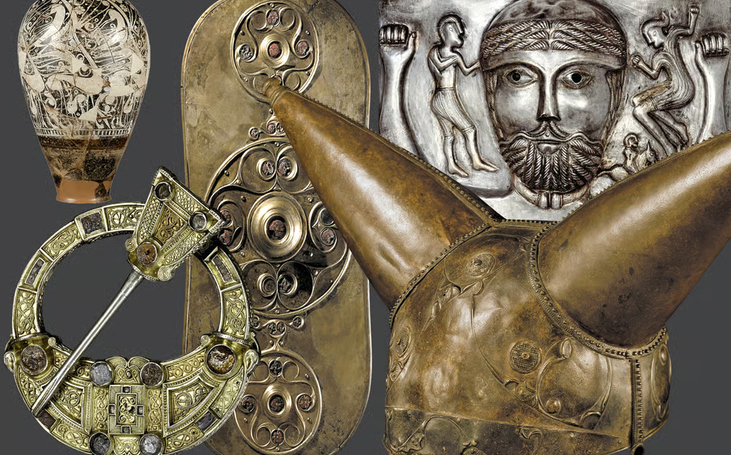
Much of this older heritage was gradually displaced, absorbed or reinterpreted as Christianity spread through Europe. The process was not identical everywhere, and Christianity itself became a diverse tradition. However, the alliance between Christian institutions and political power—especially under and after the Roman Empire—played a major role in suppressing or transforming many pre-Christian customs.
This was not simply a change in personal belief. It altered the way people understood nature, ancestry, time and community.
Many older European traditions were rooted in sacred groves, rivers, mountains, animals, the changing seasons and the cycles of birth, death and renewal. Rituals marked the solstices, equinoxes, harvests and transitions in human life. The land was not merely a resource; it was part of a living moral and spiritual order.
When such traditions were condemned as paganism, much was lost: not only particular gods and ceremonies, but also a sense of intimate responsibility toward the natural world. Some older customs survived by being absorbed into Christian festivals and local traditions, but others disappeared or survived only in fragments.
This is not an argument for romanticizing the past. Pre-Christian societies also experienced violence, inequality, superstition and sacrifice. But neither should we dismiss them as ignorant or irrelevant. We should study them honestly, with appreciation for what they understood and criticism of what they got wrong.
Knowledge Versus Dogma
What frustrates me is how readily people remain comfortable with inherited, half-examined beliefs when so much more information is now available to us.
Modern science does not require us to abandon wonder. It asks us to replace unsupported certainty with curiosity, evidence and intellectual humility.
Consider just a few facts that challenge a literalist or young-Earth creationist reading of human origins:
The Earth is vastly older than a few thousand years. Geological evidence, radiometric dating and the age of the universe all point to a deep timescale measured in billions of years.
Human beings share common ancestry with other primates. Genetic evidence indicates that humans and chimpanzees descended from a shared ancestral population millions of years ago—not that human beings came directly from modern chimpanzees.
Our species developed over a long evolutionary process. Fossils, tools, footprints, hearths and other archaeological evidence show that human physical and behavioral traits emerged over approximately six million years.
Modern humans originated in Africa and later spread across the world. Genetics and archaeology reveal migrations, population movements and interactions that cannot be reconciled with a simplistic account of humanity beginning recently in one small location.
Human history is interconnected rather than divided into isolated groups. Neanderthals, Denisovans and Homo sapiens interacted and exchanged genes. The story of humanity is therefore one of relationship, adaptation and movement—not separate creation of fixed, unchanging peoples.
These findings do not tell us that life is meaningless. They tell us that life is more ancient, interconnected and remarkable than many traditional stories imagined.
A Global Village Divided
We live in a global village connected by communication, trade, travel and technology. Yet humanity often appears to be moving backwards into factionalism, extremism and fundamentalism.
We divide ourselves over unnecessary differences of opinion, defend inherited identities as though they were unquestionable truths, and treat disagreement as a personal attack. In doing so, we forget that most human beings share the same basic hopes: safety, dignity, belonging, family, opportunity and a better future for their children.
Education cannot solve every conflict, but it can make better conflict possible. It encourages tolerance, understanding and more amicable interaction. It teaches us to distinguish between evidence and assumption, history and mythology, conviction and certainty.
Forgiveness for perceived or indirect offences from the past is not weakness. It is a more progressive and constructive choice. We did not personally create every injustice committed by our ancestors, but we can choose whether to repeat those patterns or learn from them.
An Invitation to Explore
This Heritage Day, I believe we should celebrate identity without becoming imprisoned by it. We can acknowledge our European, African and broader human histories while recognizing that no culture exists in isolation and no tradition possesses a monopoly on truth.
An inquiring mind is a more virtuous pursuit than the defense of misunderstood, unsupported mythology—especially when that mythology was inherited through institutions that were never originally ours.
The pre-Christian cultures of Europe deserve to be studied with seriousness: their languages, technologies, migrations, sacred sites, seasonal festivals, relationship with nature, art, laws and stories. They were not a perfect golden age, but neither were they an empty space waiting to be “civilized”.
Our heritage is deeper than the institutions that later claimed to define it. It reaches into the soil, the stones, the rivers, the forests and the memories of peoples who lived, loved, struggled and wondered long before Christianity arrived.
This Heritage Day, let us celebrate not only where we come from, but also our willingness to keep learning where we truly came from—and what that knowledge can teach us about becoming better human beings.


Comments